Mission, British Columbia
Scrap Car Removal In Mission, BC
Free towing on vehicles we buy, and you're paid at pickup. When you call, I'll ask about the vehicle, where it's sitting and what condition it's in, give you a price and arrange the pickup. Running or not, in a driveway, on gravel or back in the trees.
- Free towing on the vehicles we buy
- Cash before the vehicle is loaded
- Licensed recycling with a paper trail
- Buying and towing vehicles since 2000
How Does Scrap Car Removal Work In Mission?
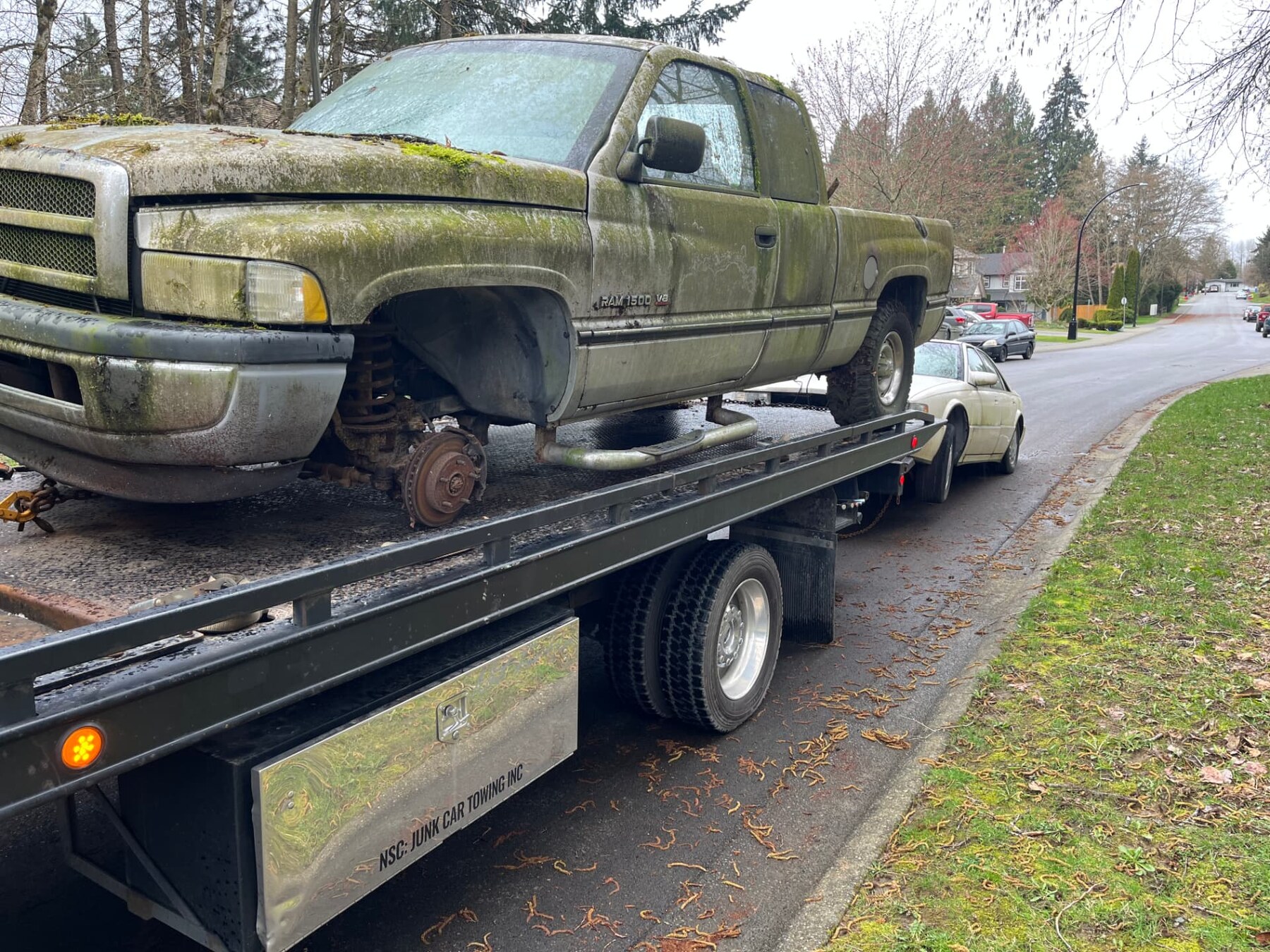
One call and one visit. You tell me the year, make, model, whether it runs and where it is sitting. I give you a cash number on that same call and we pick a time. The flat deck arrives at that time, we sign the transfer, you take the plates off, you get paid, and the vehicle is winched on and gone. Most driveways take about twenty minutes.
1. The call
Year, make, model, does it run, where is it parked, whose name is on it. That's what I need to give you a real number.
2. The time
We pick a window that works around your day: before school, after a shift, or while you're at work if someone can sign.
3. The pickup
The vehicle gets checked over, the number is confirmed, the paperwork gets signed, and you're paid before it moves.
4. After
It goes to a licensed recycler with a paper trail, so the vehicle isn't still sitting on your name somewhere.
You arrange the job with me, so the number agreed on the phone is the number honoured in your driveway. I run tow trucks with drivers I've trained, so either I bring the deck or one of them does.
Who Is Jay?
I'm Jay. I've been buying, towing and dealing with old vehicles since 2000. Thousands of pickups and recoveries out of driveways, gravel shoulders, back fields, tight carports and long muddy driveways up past Dewdney.
You talk to me when you call. I ask about the vehicle, give you the number and arrange the pickup. I also have drivers I've trained to the standard I expect, so the job gets done properly whichever truck comes out.
After this long, most of what people apologise for on the phone is routine work here. Seized brakes, flat tires, no keys, a dead battery, a vehicle sunk into gravel behind a shop. I've loaded vehicles that hadn't moved in ten years, with a tree growing through the bumper.
Ruby, my dog, rides along some days. She just likes the truck.
I load carefully. A vehicle that has been sitting has seized brakes, flat tires and rusted mounting points, so it gets winched onto the deck rather than dragged. That takes a few extra minutes and it's worth it.
Who Removes Old Pickup Trucks In Mission?
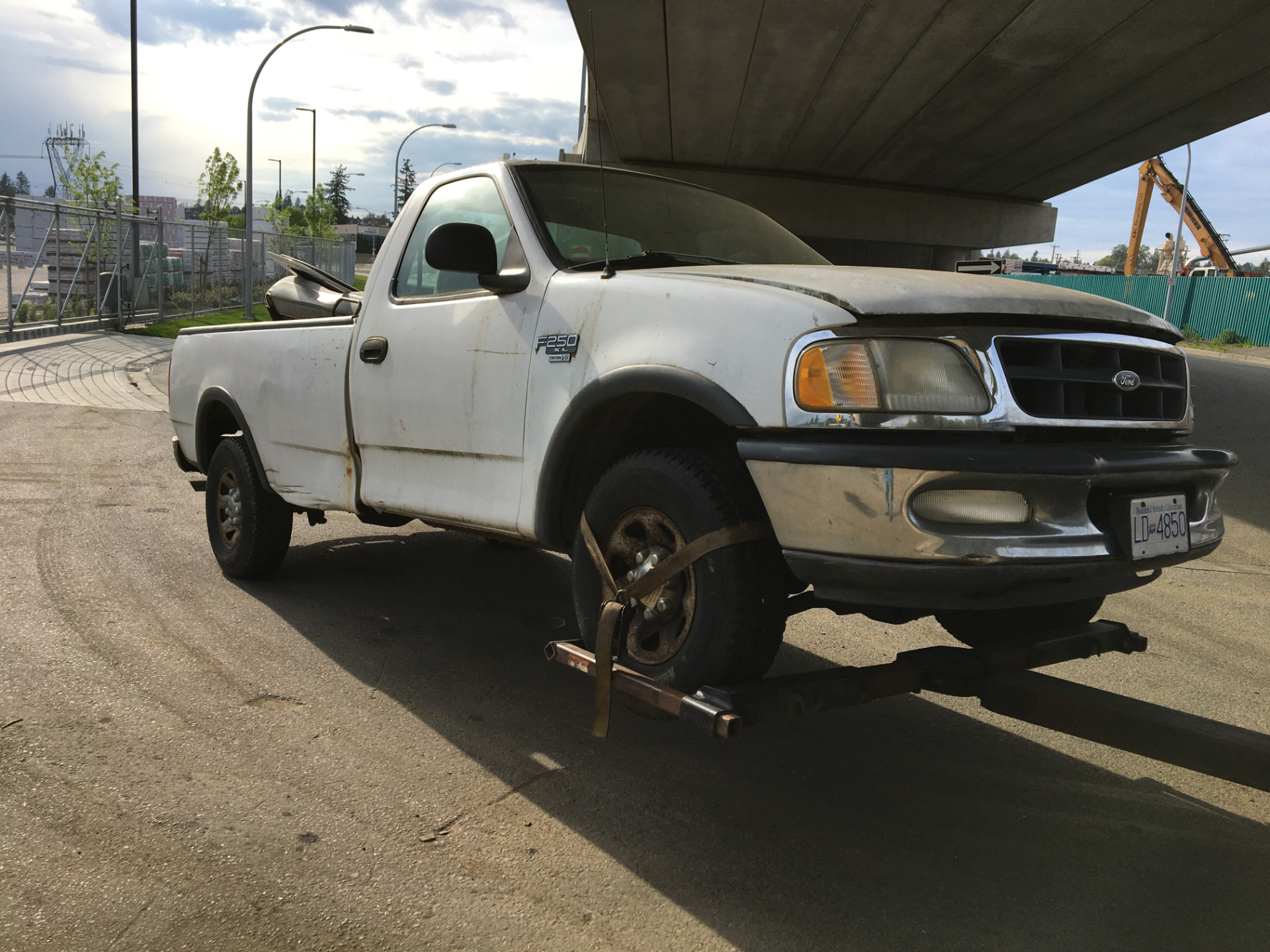
I do, and in Mission it's the most common call I get. F-150s, F-250s, Rams, Silverados, Tacomas and work vans that hauled trailers, firewood, gravel and tools for fifteen or twenty years. A truck with a blown engine, no wheels, no brakes or no battery can still be winched onto the deck.
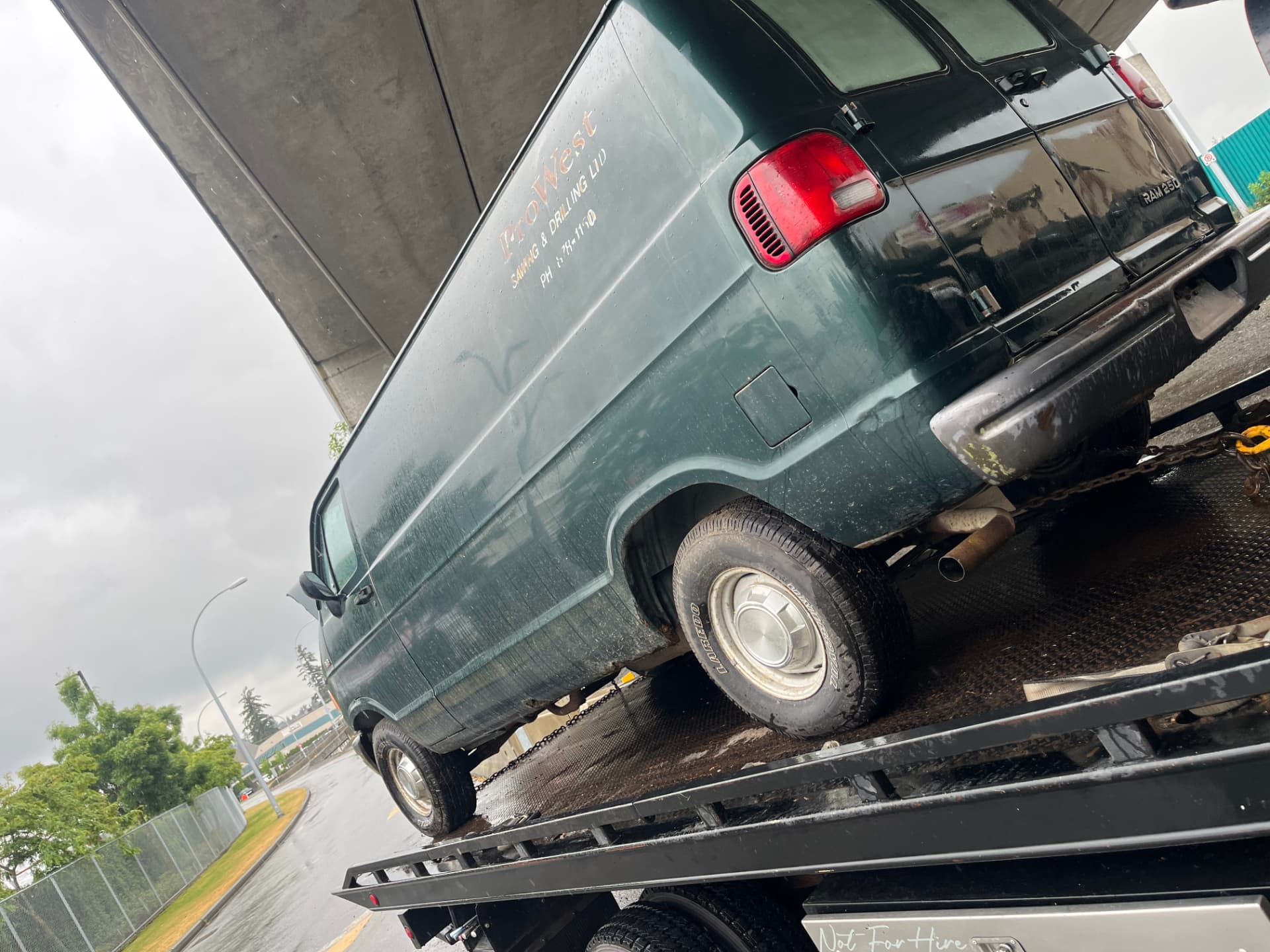
Trucks around here usually wear out slowly. Rear frame and box rust from years of wet winters, brake and fuel lines that corrode, a transmission quote that lands higher than the truck is worth, or a head gasket on a motor with 380,000 kilometres on it.
The other thing that ends a truck in Mission is space. A truck can sit beside a shop or behind a barn for years without being in anyone's way, so there's no rush to deal with it.
If your truck is on an acreage, on gravel, or parked in behind other vehicles, tell me on the call. That tells me which truck and which gear to bring.
Not sure whether your truck is worth fixing? Tell me what the shop quoted and what the truck is. I'll give you a straight read, and sometimes the answer is that you should keep it.
Call Jay 604-889-4470What Kinds Of Vehicles Does Jay Take?
Cars, SUVs, minivans, pickups and work vans, any year, running or not. In Mission that usually means family vehicles at the end of their life. Grand Caravans and Sedonas, Escapes, RAV4s, CR-Vs and Equinoxes, Civics and Corollas with a few hundred thousand kilometres, and cargo vans that cost more to keep than they earned.
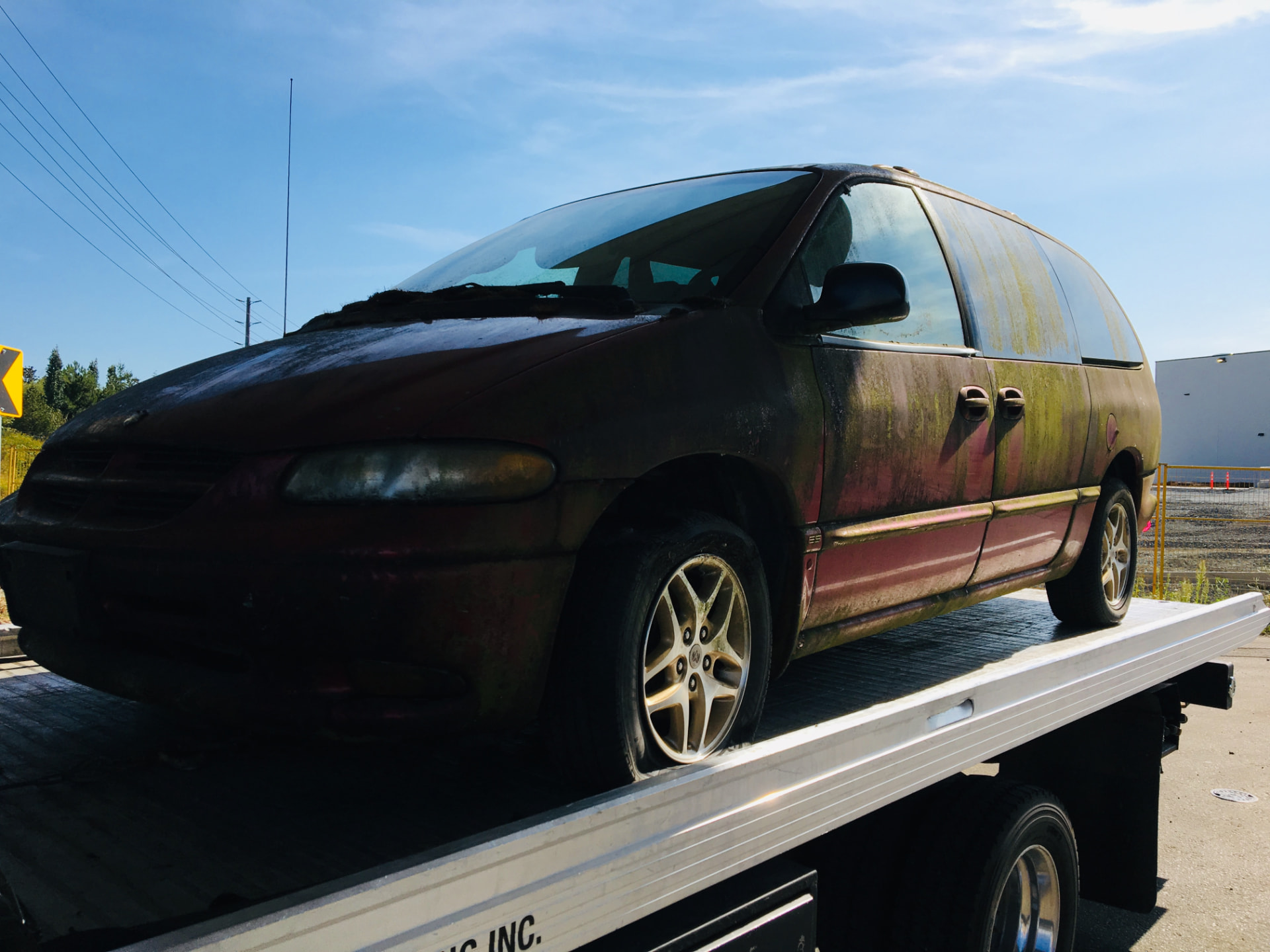
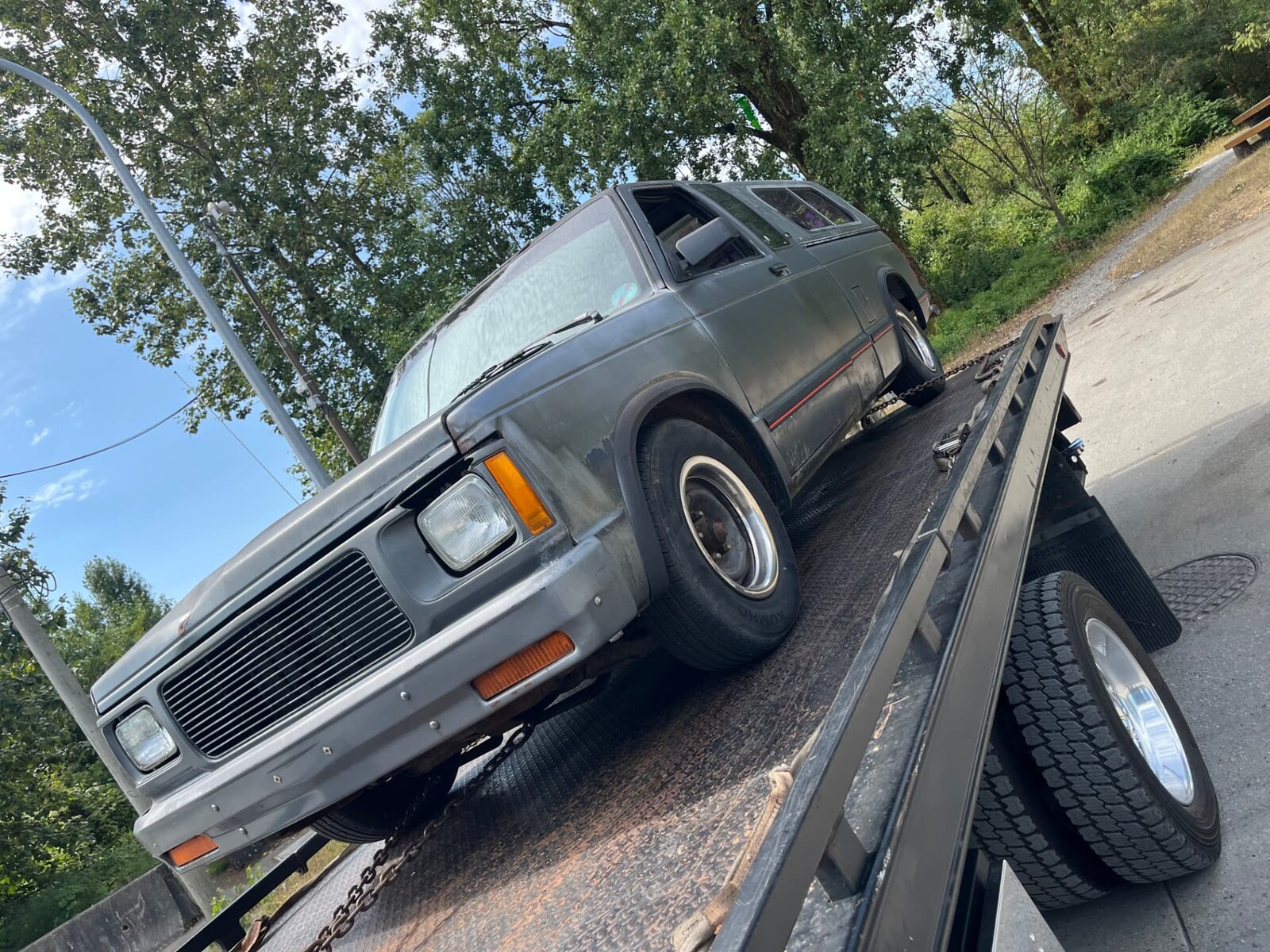
Missing parts are fine. No hood, no seats, no catalytic converter, a stripped interior, or a vehicle somebody already pulled the engine out of. It still has value in steel and salvageable parts. Describe it accurately on the phone and the number I give you holds.
Why Do So Many Vehicles Sit For Years In Mission?
Because there's room for them. Mission has driveways, gravel pads, acreages and space beside the shop, so a dead vehicle isn't blocking anything and there's no deadline to deal with it.
The rain
Wet winters mean moss on the roof and hood, rust in the rear frame, and brake lines that seize solid.
The rodents
Vehicles parked near trees or fields get mice in the wiring and insulation. That alone can end an otherwise fine vehicle.
The plan
It was going to be a project, or a kid's first car, or worth fixing next spring. Then it wasn't.
None of it is a problem here. Flat tires, seized brakes, no keys, a dead battery and wheels sunk into the gravel are all part of ordinary pickups in Mission.
If your vehicle has been sitting a long time, mention it on the call. It tells me what to bring.
Call Jay 604-889-4470Should I Repair My Vehicle Or Scrap It?
The practical test is whether the repair costs about as much as the vehicle is worth running. Once there's frame or strut tower rust, it stops being a money question and becomes a safety one.
Usually worth fixing
- A solid body with one mechanical failure and a fair quote
- Alternators, starters, brakes, water pumps, sensors
- A vehicle you actually like, with a clean frame
Usually not
- Engine or transmission replacement on a high-kilometre vehicle
- Rust in the frame, rockers or strut towers
- Rodent-chewed wiring harnesses
- A list of repairs rather than one repair
Sometimes the honest answer is that you should fix it, or sell it privately instead. If that's how it looks to me, I'll say so. It depends on the vehicle.
How Much Is My Scrap Vehicle Worth?
It depends on the vehicle, and you'll have a real number in about two minutes on the phone. What matters is the year, make and model, the condition it's in, whether it runs, whether it's complete, what parts on it are still wanted, and what recycled material is worth at the time.
- The vehicle itself. Year, make and model matter, and so does whether people around here still drive them and need parts for them.
- Condition and completeness. Rust, damage and missing parts come off the value. A vehicle that has already been picked over is worth less than one that is still whole.
- Whether it runs. A complete running vehicle can be worth noticeably more than a dead one, because it has options beyond recycling. A blown engine doesn't stop me buying it.
I don't quote a range on a website to get you to call. I ask about the vehicle first, then you get one number, and that's the number you get paid.
Not every older vehicle is only worth its recycling value. If yours still runs, or it's a truck or van somebody could still use, read cash for cars in Mission. That page covers selling a vehicle rather than scrapping it.
What Paperwork Do I Need To Scrap A Car In BC?
Government photo ID and proof of ownership, normally your ICBC vehicle registration. The name on the registration should match the person signing and taking the cash. We fill out the transfer together and I don't rush that part.
Lost registration
Common and usually solvable. An ICBC Autoplan broker can reprint the registration for the registered owner, often the same day. Call me anyway and I'll tell you what to ask for.
Estate or inherited vehicle
It comes up often, and it depends on the estate paperwork. Tell me the situation on the call and I'll tell you what I need or where to check.
Licence plates
Plates stay with you in BC, not with the vehicle. Pull them before the truck leaves, then cancel or transfer the insurance.
The paperwork matters more than most people expect. Done properly, ownership is transferred and the vehicle is no longer registered to you. Anything specific to your situation is worth confirming with an ICBC Autoplan broker. More paperwork answers on the FAQ page.
What Happens On Pickup Day?
The deck backs in, the vehicle gets looked over and the number we agreed on is confirmed. The transfer gets signed, you take your plates, and you're paid in cash. Then the vehicle is winched on and it's gone, usually twenty to thirty minutes.
- Do I need to be there? Someone with photo ID and the ownership paperwork has to sign and take the cash, but it doesn't have to be at your house. A shop, a workplace or a relative's driveway all work.
- Do I need to clean it out? Check the glovebox, under the seats and the back for anything you want. Whatever is left goes with the vehicle.
- What about my driveway? I ask about gravel, slope and access before the truck is sent, so we bring the right equipment. Vehicles get winched onto the deck rather than dragged.
What Happens To My Vehicle After Pickup?
It goes to a licensed recycler with a paper trail. Fluids like fuel, oil, coolant, brake fluid and refrigerant are drained and handled properly. Usable parts can be recovered for vehicles still on the road here, and the steel and aluminium get recycled.
That's also why a dead vehicle is still worth money. The value is in the parts and the material, not in whether it drives.
Mission Questions People Ask Me Every Week
Do you remove junk cars in Mission, BC?
Yes. I cover all of Mission, including Cedar Valley, Hatzic, Silverdale, Ferndale, Dewdney, Steelhead, Stave Falls and the acreages up Dewdney Trunk Road. Towing is included on the vehicles I buy, and you are paid cash when the vehicle is picked up.
Do I pay for towing?
No. On the vehicles I buy in Mission, towing is part of the deal. There is no fuel charge, winching charge or distance charge taken off your quote.
Can you remove a vehicle that has not moved in years?
Yes. Flat tires, seized brakes, no battery, no keys and moss on the paint are all common here. The flat deck has a winch, so the vehicle gets pulled on rather than dragged.
Who removes old pickup trucks in Mission?
I do. Trucks are the most common call I get in Mission: F-150s, F-250s, Rams, Silverados and work vans. A truck with no engine, no wheels or no brakes can still go on the deck.
What paperwork do I need to scrap a car in BC?
Government photo ID and proof of ownership, normally the ICBC vehicle registration. The name on the registration should match the person signing and taking payment. If the registration is lost, an ICBC Autoplan broker can usually reprint it for the registered owner.
What happens to my licence plates?
In BC the plates stay with you, not the vehicle. Take them off before the truck leaves, then cancel or transfer the insurance.
When do I get paid?
Cash is in your hand after the paperwork is signed and before the vehicle goes on the deck.
What happens to my vehicle after pickup?
It goes into proper recycling channels with a paper trail. Fluids are handled properly, usable parts can be recovered for vehicles still on the road here, and the steel and aluminium get recycled.
Vehicle sitting in Mission?
Tell me the year, make, model and whether it runs. You'll have a cash number and a pickup time on the same call.